

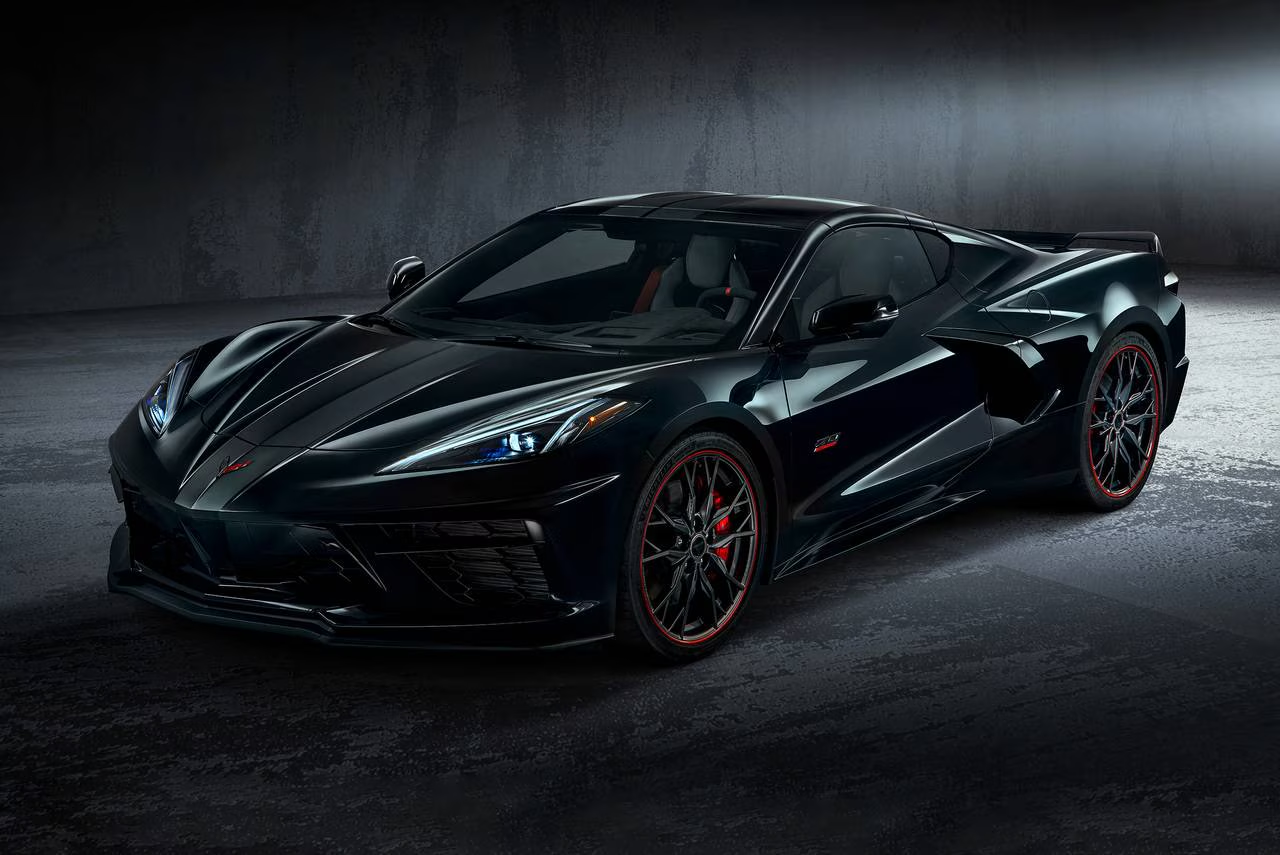
The Chevrolet Corvette is an iconic American sports car that has defined high-performance driving for decades. From its first generation in the 1950s to the modern mid-engine C8 generation, the Corvette combines style, speed, and advanced automotive technology. Known as “America’s Sports Car,” it delivers thrilling performance, innovative engineering, and cutting-edge driver conveniences.
1. Engine and Powertrain
The current Corvette (C8 generation) features a mid-engine layout, a major shift from previous front-engine models. Engine options include:
- 6.2L LT2 V8 naturally aspirated engine – Standard in Stingray
- Optional performance upgrades in Z06 and ZR1 trims
How It Works:
- The V8 engine burns a mixture of fuel and air in cylinders, moving pistons that turn the crankshaft.
- With direct fuel injection and high compression, the engine produces over 490 horsepower in the Stingray and up to 670 horsepower in the Z06.
- The mid-engine design places the engine behind the driver but ahead of the rear axle. This improves weight distribution, lowers the center of gravity, and enhances handling and cornering precision.
2. Transmission Options
The Corvette uses an 8-speed dual-clutch automatic transmission.
How It Works:
- Dual-clutch systems have two separate clutches: one handles even-numbered gears, the other odd-numbered gears.
- This allows near-instantaneous gear changes without interrupting power delivery to the wheels.
- The result is smooth acceleration, rapid shifts, and a race-car-like driving experience.
3. Performance and Acceleration
- 0–60 mph in under 3 seconds for Z06 trims
- Top speed exceeding 190 mph
- Track-capable handling with optional performance packages
How It Works:
- Instantaneous torque from the V8 engine powers the rear wheels efficiently.
- Performance suspension and adaptive dampers keep tires in contact with the road for maximum grip.
- Electronic stability systems, launch control, and active aerodynamics optimize acceleration and high-speed stability.
4. Suspension and Handling
- Independent suspension on all four wheels
- Optional Magnetic Ride Control for adaptive damping
- Performance packages like Z51 add enhanced brakes, cooling, and aerodynamics
How It Works:
- Each wheel moves independently to absorb bumps while maintaining traction.
- Magnetic Ride Control uses electromagnetically controlled dampers that adjust stiffness thousands of times per second based on road conditions and driver inputs.
- Aerodynamic elements like front splitters and rear spoilers improve downforce and high-speed cornering.
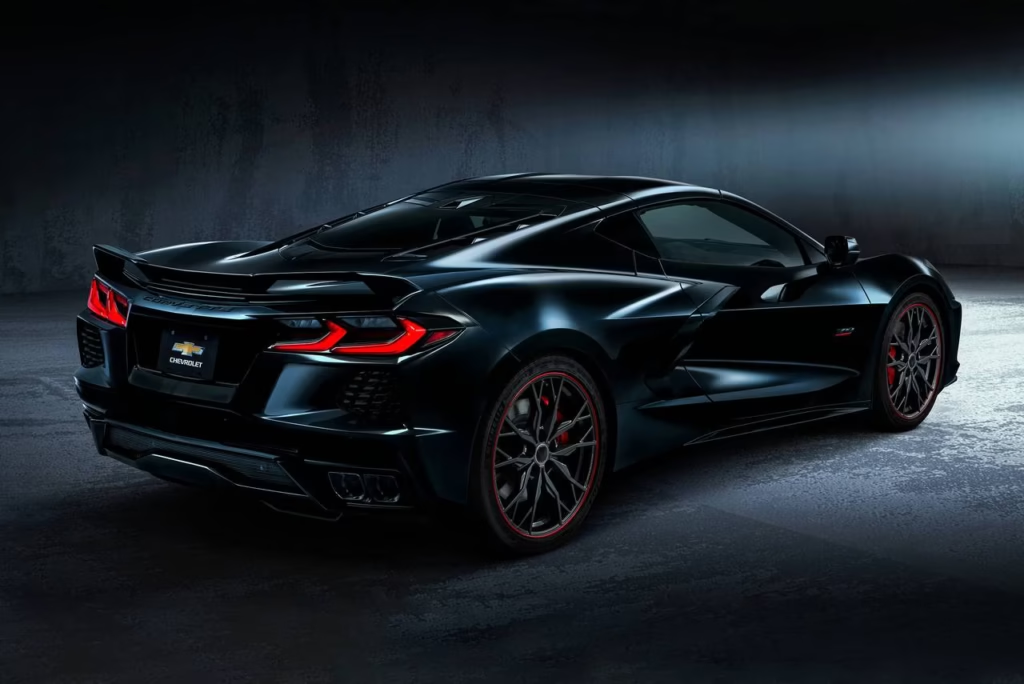
5. Aerodynamics and Exterior Design
- Sleek, low-drag body design
- Mid-engine cooling vents and air intakes
- Optional rear spoiler and aerodynamic package
How It Works:
- Airflow is carefully managed over the body to reduce drag and increase downforce.
- Cooling vents direct airflow to the engine and brakes, preventing overheating during spirited driving.
- Active aero elements adjust in real-time depending on speed to optimize performance and stability.
6. Interior and Infotainment
- Driver-centric cockpit with digital instrument cluster
- 10-inch touchscreen infotainment system with Apple CarPlay® and Android Auto®
- Optional Bose® premium audio system
- Seating for two with supportive sport seats
How It Works:
- The digital cluster provides customizable performance readouts: speed, RPM, G-forces, lap times, and more.
- The touchscreen controls climate, media, navigation, and vehicle settings.
- Over-the-air software updates continuously improve the car’s technology and performance.
7. Safety and Driver Assistance
- Advanced traction and stability control
- Multiple airbags and reinforced passenger safety cell
- Rearview camera with parking sensors
- Optional performance safety packages
How It Works:
- Sensors monitor wheel slip, steering, and acceleration to help maintain control during aggressive driving.
- Safety cell design protects occupants in the event of a collision.
- Advanced braking systems and electronic aids optimize stopping power and stability.
8. History and Legacy
- First introduced in 1953, the Corvette has evolved through eight generations (C1–C8).
- Known for combining American muscle car power with sports car agility.
- The C8 mid-engine generation marks a historic shift, bringing the Corvette closer to European supercar performance standards at a more affordable price point.
9. Performance Technology Features
- Launch Control: Optimizes wheel grip for maximum acceleration from a stop.
- Selectable Drive Modes: Adjust engine, suspension, steering, and traction control for Touring, Sport, Track, or Wet conditions.
- Active Exhaust System: Modulates engine sound for comfort or sporty performance.
How It Works:
- Launch Control monitors wheel slip and engine torque to ensure optimum traction.
- Drive modes electronically tune vehicle systems for ideal performance depending on driving conditions.
- Active exhaust uses valves to change the exhaust path, adjusting the sound and engine flow.
10. Fuel and Efficiency
- Although a high-performance V8, advanced fuel injection and aerodynamics improve efficiency relative to older generations.
- Performance trims prioritize power over economy, while standard Stingray balances speed with reasonable fuel use.
Conclusion
The Chevrolet Corvette is a masterclass in performance engineering. From its mid-engine layout to dual-clutch transmission, adaptive suspension, and advanced aerodynamics, the Corvette offers supercar-level capabilities with legendary American styling. Whether on the street or track, it combines power, precision, and technological sophistication in an unforgettable driving experience.